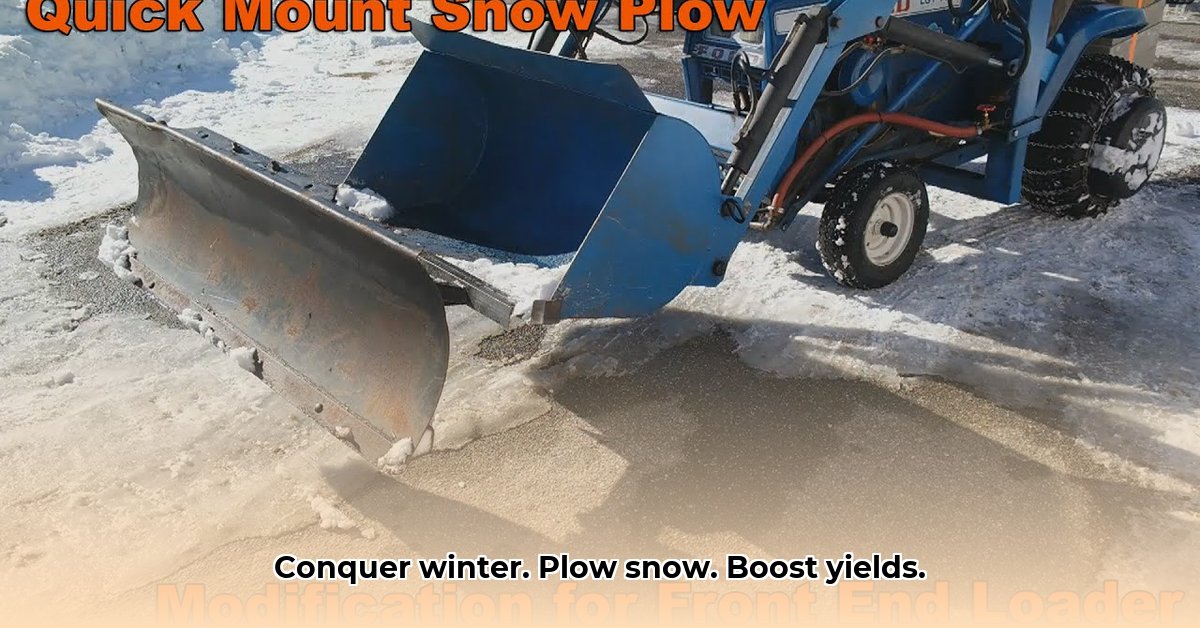
Winter's harsh grip can significantly impact farm operations. Frozen fields, blocked access roads, and snow-covered driveways lead to delays, reduced productivity, and increased costs. However, a compact tractor snow plow blade offers a highly effective and sustainable solution to maintain operational continuity throughout the winter months. This guide will provide a step-by-step approach to selecting, using, and maintaining a snow plow blade, focusing on maximizing efficiency and minimizing environmental impact. For more options, check out tractor snow removal solutions.
Choosing the Right Snow Plow Blade: A Practical Guide
Selecting the appropriate snow plow blade requires careful consideration of several key factors. The following steps will guide you through the process:
Step 1: Matching Blade Size to Tractor Horsepower (HP)
The most crucial factor is matching your snow blade's size to your tractor's horsepower. Underpowering your tractor will lead to inefficient snow removal and potential damage to the tractor itself. Overpowering, while seemingly beneficial, isn't always necessary and can be wasteful. Here's a general guideline:
| Tractor Horsepower (HP) | Recommended Blade Width (inches) | Notes |
|---|---|---|
| Under 30 HP | 60-72 | Suitable for lighter snowfalls and smaller areas. |
| 30-50 HP | 72-84 | Ideal for moderate snowfalls and average-sized areas. |
| Over 50 HP | 84+ | Best for heavy snowfalls and larger areas requiring rapid snow clearance. |
Remember: Always consult your tractor's owner's manual and the snow blade manufacturer's specifications for precise compatibility. This ensures optimal performance and protects your equipment. Don't hesitate to contact your equipment dealer for personalized advice.
Step 2: Blade Material and Durability: Balancing Strength and Sustainability
Most snow plow blades are constructed from steel, chosen for its strength and durability. However, the type of steel varies greatly. High-quality steel blades offer superior resistance to wear and tear, extending their lifespan and minimizing the need for frequent replacements. Furthermore, consider choosing blades made from recycled steel to reduce your environmental footprint. This sustainable practice aligns with modern agricultural principles aimed at environmental responsibility. Recycled steel blades offer the same durability as new steel.
Step 3: Mounting Systems: Ensuring Secure and Compatible Installation
Different tractor brands and models utilize various mounting systems. Prior to purchase, ensure the snow blade's mounting system is fully compatible with your tractor's three-point hitch or quick-attach system. A secure connection is critical for safe and effective operation. Incorrect mounting can lead to accidents and damage to both the tractor and the snow blade. Clear diagrams and instructions are usually provided by manufacturers to guide you through the installation process.
Step 4: Budget Considerations: Balancing Cost and Value
Snow plow blades vary considerably in price, influenced by factors such as size, material, and features. Create a realistic budget early in your decision-making process. This prevents buying a blade that's either too expensive or insufficient for your needs. Consider the long-term costs, including maintenance and potential repairs. A higher initial investment in a durable, high-quality blade often translates to lower overall costs over its lifespan.
Step 5: Features to Consider: Enhancing Efficiency and Convenience
Several additional features can significantly enhance your snow-clearing efficiency and overall experience. These include:
- Adjustable Angle: Allows you to adjust the blade's angle for optimal snow removal in varying conditions.
- Hydraulic Angling: Provides precise control of the blade angle from the tractor seat, ideal for maneuvering in tight spaces and varying snow depths.
- Snow Deflector: Directs the snow away from buildings, livestock, or other sensitive areas.
Safe Operation and Maintenance: Prioritizing Safety and Longevity
Safe operation and regular maintenance are essential for both personal safety and the longevity of your snow plow blade. Here's a simple approach:
- Pre-Operation Inspection: Before each use, thoroughly inspect the blade, mounting system, hydraulic lines (if applicable), and any other components for damage or wear.
- Safe Operating Practices: Operate the tractor at a safe speed, avoiding sudden movements. Maintain constant awareness of your surroundings.
- Routine Maintenance: Regularly lubricate moving parts, clean the blade after each use, and inspect for damage. Store the blade properly during periods of non-use.
Following these guidelines will significantly extend the life of your snow blade and reduce the risk of accidents or equipment failure.
Troubleshooting Common Issues: Quick Fixes for Minor Problems
Many common issues can be resolved with simple troubleshooting. If your blade isn't angling correctly, for example, check for hydraulic fluid leaks. Refer to your snow blade's owner's manual for detailed troubleshooting procedures.
Environmental Considerations: Sustainable Snow Removal Practices
Using a compact tractor with a snow plow blade is generally more fuel-efficient than larger machines, leading to reduced emissions and a smaller carbon footprint. Choosing blades made from recycled steel further enhances the environmental benefits. This aligns with sustainable farming practices, minimizing your environmental impact.
Conclusion: Maximizing Farm Efficiency Through Sustainable Snow Removal
Selecting the right compact tractor snow plow blade can dramatically improve your farm's winter efficiency and overall productivity. By carefully considering the factors outlined above and prioritizing safety and maintenance, farmers can ensure smooth operations throughout the winter months while simultaneously promoting sustainable agricultural practices.
Resources
- Earth & Turf Attachments (Example resource; replace with actual relevant links)
- [Your Tractor Manufacturer's Website] (Example resource; replace with actual relevant links)
- [Agricultural Safety Guidelines] (Example resource; replace with actual relevant links)